You do not need a backyard to grow fresh food. A balcony, windowsill, patio or bright indoor corner can become a productive little garden when you choose plants that match the space.
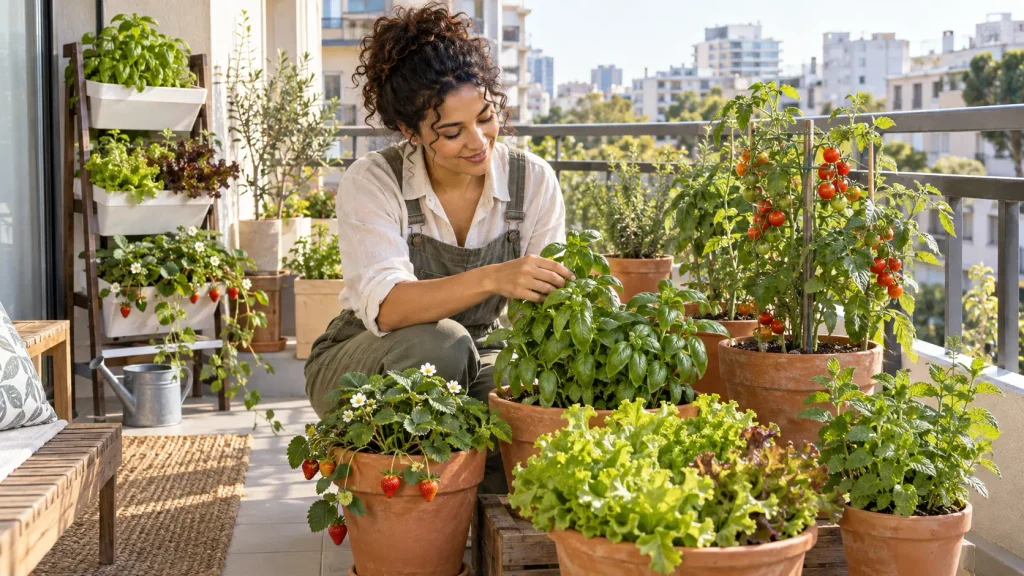
A small apartment balcony can produce herbs, greens and compact vegetables.
Note: To start an apartment garden, measure your direct sunlight, choose three to five beginner-friendly plants, use containers with drainage holes, fill them with potting mix and water according to the soil—not a rigid calendar. Herbs and leafy greens are usually the easiest place to begin.
In This Guide
- What apartment gardening means
- Measure your sunlight
- Choose suitable plants
- Select containers and soil
- Plant, water and feed correctly
- Prevent common problems
- Build a simple starter garden
- Frequently asked questions
What Is Apartment Gardening?
Apartment gardening is the practice of growing plants in the limited indoor or outdoor spaces around an apartment. Instead of traditional garden beds, apartment gardeners commonly use pots, grow bags, window boxes, hanging baskets, vertical planters or compact hydroponic systems.
Possible growing locations include:
- Balconies and patios
- Sunny windowsills
- Bright kitchen counters
- Indoor shelves with grow lights
- Rooftops or shared areas where permitted
The goal is not to squeeze a full backyard into a tiny area. A successful small-space garden uses plants and containers selected specifically for the available light, climate and room.
Can You Really Grow Food in an Apartment?
Yes. Herbs, leafy vegetables and several compact fruiting plants can grow well in containers. Your harvest will depend on sunlight, container size, plant variety, temperature, watering and the length of your growing season.
Beginners often get better results from a few well-cared-for plants than from a crowded collection. Three healthy containers can teach you more than fifteen neglected ones.
Step 1: Measure the Sunlight in Your Space
Sunlight determines what you can realistically grow. Before buying plants, observe your intended growing area several times during one clear day. Record when direct sunlight begins and ends.
Do not confuse a bright room with direct sun. Direct sunlight creates a defined shadow, while indirect light brightens the space without the sun shining straight onto the leaves.
| Available light | Plants worth considering |
|---|---|
| Abundant direct sun | Compact tomatoes, peppers, strawberries and many herbs |
| Moderate direct sun | Lettuce, arugula, chard, parsley and chives |
| Limited natural light | Shade-tolerant herbs or leafy greens, possibly supported by a suitable grow light |
These are starting points rather than guarantees. Check the requirements of the exact plant variety you buy. Buildings, balcony roofs, trees and seasonal changes can all affect real light exposure.
Does balcony direction matter?
In the Northern Hemisphere, south-facing spaces commonly receive strong light, east-facing spaces receive gentler morning sun and west-facing spaces can become hot in the afternoon. North-facing locations often receive less direct sun. The pattern reverses in the Southern Hemisphere.
Your own observation is more useful than direction alone because neighboring structures may block the sun.
Step 2: Choose Beginner-Friendly Edible Plants
Choose crops that match your light and the amount of care you can provide. Look for seed packets and plant labels containing terms such as compact, dwarf, patio or container variety.
Easy herbs
- Basil: A productive warm-weather herb for sunny spaces.
- Chives: Compact and easy to harvest a little at a time.
- Parsley: Useful in the kitchen and suitable for containers.
- Mint: Vigorous and best kept in its own pot.
- Thyme and oregano: Compact herbs that prefer good drainage.
Leafy vegetables
Loose-leaf lettuce, arugula, spinach, bok choy, mustard greens and Swiss chard are practical choices because many can be harvested gradually. Taking selected outer leaves allows the center to continue growing.
Compact fruiting plants
If you have strong sunlight, consider dwarf cherry tomatoes, compact peppers, strawberries, bush beans or patio cucumbers. Fruiting plants generally need larger containers, stronger light and more feeding than leafy greens.
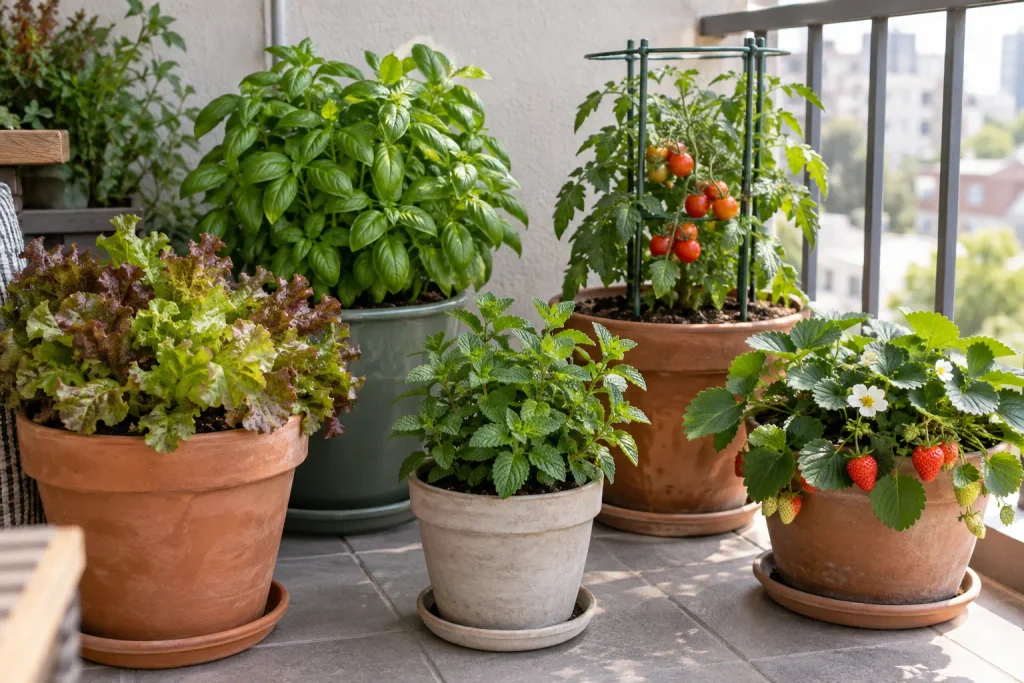
Separate containers make it easier to meet the different needs of each plant.
Step 3: Select Containers With Proper Drainage
A suitable container must provide enough root space and allow excess water to escape. For most conventional container gardens, drainage holes are essential.
Your options include:
- Terracotta, ceramic or plastic pots
- Fabric grow bags
- Window boxes and railing planters
- Hanging baskets
- Self-watering containers
- Vertical planting systems
Choose the container according to the plant’s mature size, not the size of the seedling at the store. Small pots dry quickly and can restrict roots.
Balcony safety: Wet soil and large containers can be heavy. Check your lease or building rules, keep pots stable and never suspend heavy objects where they could fall. Use secure saucers so water does not drip onto neighbors below.
Step 4: Use Potting Mix, Not Dense Ground Soil
Soil collected from a yard may become compacted in a container, drain poorly or introduce pests and weed seeds. Use a mix labeled for container plants.
Good container mix balances moisture retention with drainage. Depending on the product, it may contain compost, coco coir, peat moss, perlite, vermiculite or composted bark.
Some mixes already contain fertilizer. Read the label before adding more.
Step 5: Decide Between Seeds and Starter Plants
Seeds cost less per plant and provide more variety, but they require patience and suitable germination conditions. Young starter plants provide a faster, simpler beginning.
A sensible first garden can combine both methods: buy two established herbs or vegetables and grow one easy leafy crop from seed.
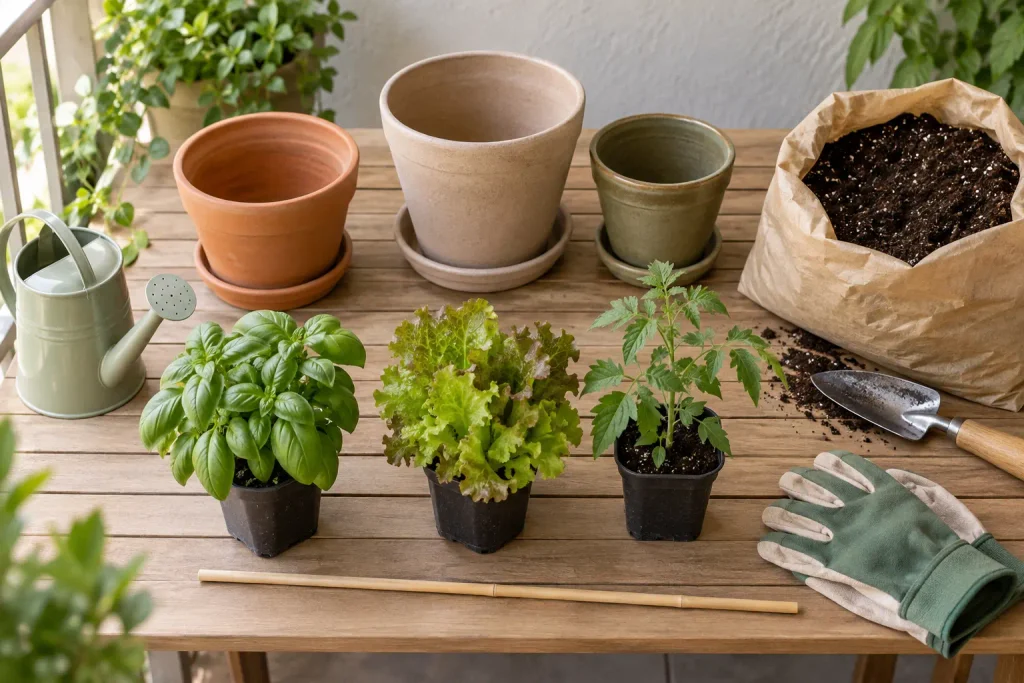
A basic starter setup is enough; purchase extra equipment only when it solves a real problem.
Step 6: Plant Without Overcrowding
Overcrowded plants compete for sunlight, water and nutrients. Dense foliage also reduces airflow. Follow the spacing guidance on the seed packet or plant label and consider the crop’s mature width.
Use height intelligently. A stable trellis, stake or cage can support tomatoes, beans and compact cucumbers while preserving floor space. Secure supports so they cannot fall in strong wind.
Step 7: Water According to the Soil
Containers can dry faster than garden beds, especially in hot or windy conditions. That does not mean every plant needs water at the same time each day.
- Feel the upper layer of potting mix.
- If it feels dry and the plant needs water, water slowly and thoroughly.
- Stop after excess moisture begins leaving the drainage holes.
- Empty indoor saucers when necessary so roots do not remain in standing water.
Temperature, wind, humidity, pot size, plant type and container material all affect watering frequency. Hanging baskets, small pots and fabric bags often dry fastest.
Step 8: Feed Container Plants Carefully
Container plants have access to a limited amount of soil, so nutrients eventually become depleted. Use a fertilizer appropriate for the crop and follow its label precisely.
More fertilizer does not mean faster or healthier growth. Excessive feeding can damage plants. For edible crops, use only products labeled for the intended application.
Step 9: Manage Wind, Heat and Pests
Wind
Upper-floor balconies may be much windier than ground-level gardens. Place delicate plants near a sheltered wall, select stable containers and secure tall crops.
Heat
Concrete floors and walls can reflect heat. During extreme conditions, sensitive plants may benefit from afternoon protection. Any temporary shade must be safe, secure and permitted by your building.
Pests and plant problems
Inspect both sides of leaves every week. Watch for holes, sticky residue, webbing, discoloration, tiny insects, distorted new growth or unexpected wilting.
Do not apply a random treatment before identifying the cause. Overwatering, underwatering, heat stress, nutrient problems and pests can create similar symptoms.
What If You Do Not Have a Balcony?
You can still grow food on a bright windowsill, under an appropriate grow light, in a countertop herb garden or in a compact hydroponic unit.
Indoor gardens require particular attention to light, airflow and drainage. Use waterproof trays, protect furniture and keep electrical equipment safely separated from water.
Common Apartment Gardening Mistakes
- Starting too big: Begin with three to five plants.
- Ignoring sunlight: Measure the space before selecting crops.
- Using pots without drainage: Trapped water can damage roots.
- Choosing containers that are too small: Plan for mature root size.
- Watering by calendar: Check soil and weather conditions first.
- Ignoring wind: Stabilize pots and supports.
- Expecting perfection: Treat early setbacks as useful information.
A Simple Apartment Garden Starter Plan
For a sunny location, a manageable first setup could include:
- One basil plant
- One container of loose-leaf lettuce
- One dwarf cherry tomato plant
- Three appropriately sized containers with drainage
- Container potting mix
- Saucers or another safe drainage solution
- A small watering can
- A stable tomato support
Replace any plant that does not suit your light or local conditions. Start with the essentials and add equipment only after you understand what your garden needs.
Apartment Garden Launch Checklist
- ☐ Confirm gardening is permitted in the intended area.
- ☐ Record the hours of direct sunlight.
- ☐ Select three to five suitable plants.
- ☐ Choose containers with drainage holes.
- ☐ Purchase fresh container potting mix.
- ☐ Arrange a safe method for catching drainage water.
- ☐ Secure pots and supports against wind.
- ☐ Check the soil regularly instead of watering automatically.
Final Thoughts
Apartment gardening begins with observation, not shopping. Measure your sunlight, choose a few appropriate plants and learn how their needs change throughout the week.
Your first harvest may be a handful of basil or a bowl of lettuce, but it demonstrates something valuable: fresh food can grow without a traditional yard.
Start small, observe closely and improve your garden one container at a time.
Frequently Asked Questions
What vegetables are easiest to grow in an apartment?
Loose-leaf lettuce and other compact leafy greens are often manageable for beginners. Herbs are another practical starting point. The easiest option depends on your available sunlight and temperature.
How much sunlight does an apartment garden need?
Requirements vary by crop. Fruiting vegetables generally need more direct light than many leafy vegetables. Check the needs of the exact variety you plan to grow.
Can vegetables grow indoors without direct sunlight?
Some leafy plants tolerate lower light, but ordinary room lighting is rarely sufficient for productive edible growth. A suitable grow light may be needed when natural light is limited.
Are self-watering planters good for beginners?
They can reduce watering frequency, but they are not maintenance-free. The reservoir, soil moisture and plant condition still require monitoring.
Can recycled containers be used for edible plants?
Some can be reused if they are clean, made from appropriate material and fitted with drainage holes. Never use containers that held hazardous substances.
How can I start an apartment garden cheaply?
Start with a few easy plants, simple containers and quality potting mix. Reuse safe containers when appropriate and postpone decorative purchases until you know what your plants require.
